We've rebranded! Formerly known as Green Mortgages
We've rebranded! Formerly known as Green Mortgages
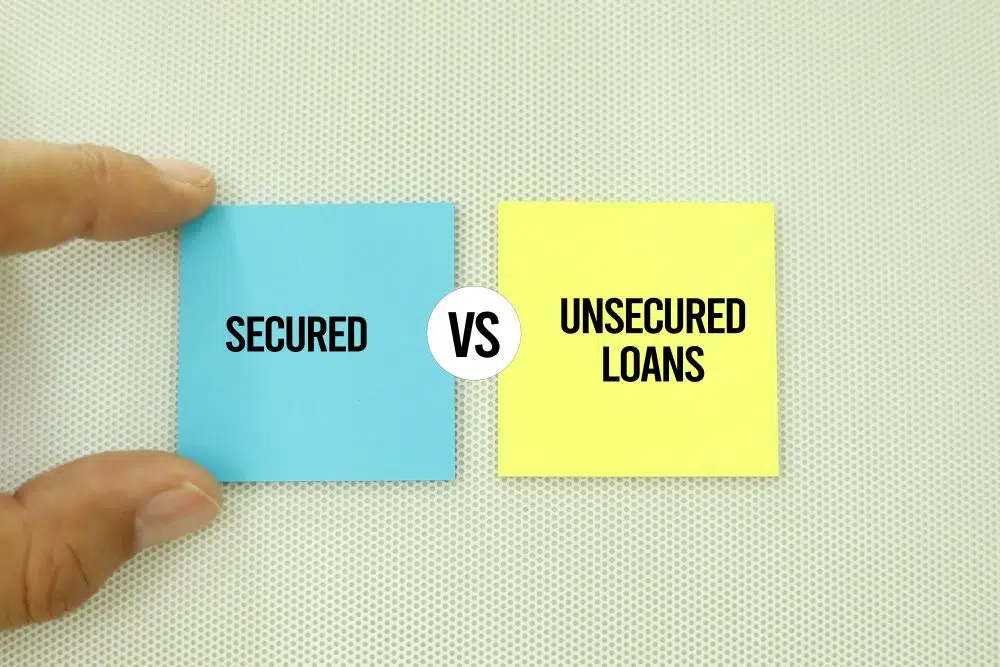

There are two types of debt we’re going to cover in this helpful blog post: secured vs unsecured debt. In simple terms, secured debt is attached to an asset, such as your car or home. Unsecured debt isn’t linked to collateral. An example of unsecured debt includes credit cards, personal loans and unpaid invoices. Debt type can affect mortgage borrowing and consolidation options. It’s important to understand how these work, as you may have options that can help with managing debt, such as debt consolidation mortgages.
Let’s further break down both of these debt types. We’re here to provide you with a clear understanding of debt, so you can approach managing it in a way that’s beneficial to you.
As previously alluded to, secured debt is linked to some form of collateral. For example, your car or home is considered secured debt because it’s linked to an asset. When you’re unable to pay secured debt, lenders might be at liberty to repossess the asset it’s attached to.
The reason it’s considered “secured” is that the collateral is considered security for the loan. If a borrower fails to make payments, such as on a mortgage or car loan, the lender can repossess the asset. This is how lenders can recoup the money they’re owed.
A few examples of secured debt include:

Now, unsecured debt has no asset attached to it. This makes lending a little more complicated. Since it’s not directly linked to an asset, there isn’t any collateral to repossess but the downside of this is that it may come with higher interest rates. These interest rates may be based on credit scores, as well as other past credit management. These rates can accumulate over time. This is especially true for borrowers only making minimum payments.
Missed payments can also come with massive penalties, such as a lower credit score that can affect future borrowing and even higher future interest rates. Lenders charge higher interest rates on unsecured debt to offset the increased risk.
Different types of unsecured debt include:
So, let’s go over some of the key differences. We have the most notable difference between the two, secured debt is attached to an asset and unsecured debt is not backed by an asset. Check out our blog post on ‘how to build a healthy credit profile’ for more insight.
Risk levels
Secured debt: You risk losing the asset tied to the loan, such as your home or car, if you fail to keep up with repayments.
Unsecured debt: While you won’t lose a specific asset, missed payments can result in defaults, debt collection or court action.
Interest rates
Secured debt: Usually comes with lower interest rates, meaning borrowing is often more affordable.
Unsecured debt: Typically has higher interest rates, so total cost of borrowing can be significantly higher.
Repayment terms
Secured debt: Often more manageable as they’re spread over a longer period of time, which helps to reduce monthly payments.
Unsecured debt: Personal loans usually have shorter fixed terms. Credit cards and overdrafts are flexible, but high interest can make long-term balances expensive.
Borrowing limits
Secured debt: You can usually borrow larger amounts, often based on the value of the asset you’re using as security.
Unsecured debt: Borrowing limits are generally lower and based on your income, affordability and credit history.
Impact on credit profile
Secured debt: Missed payments can damage your credit score. Repossession or foreclosure can have long lasting effects on your ability to borrow.
Unsecured debt: Late or missed payments also harm your credit score. High credit card balances can negatively affect your credit utilisation, even if you pay on time.

The type of debt you have can significantly impact your mortgage eligibility. However not all debt is created equally, at least not to lenders. Let’s review how the type of debt can affect your mortgage eligibility.
Different debts are viewed as more severe and problematic than others. For example, payday loans may suggest financial instability to lenders. Credit card debt isn’t necessarily viewed unfavourably in itself, but consistently exceeding your credit limit or only making minimum payments over a long period can raise concerns. Borrowers who are in significant debt or struggling to manage repayments may find it more difficult to secure a mortgage. Student loans are treated more leniently as lenders focus on the mandatory repayment amount rather than the outstanding balance. Overdrafts can also affect your eligibility, particularly if you regularly rely on them as this may indicate difficulty managing day-to-day finances.
Mortgage lenders carry out detailed affordability checks to assess whether you can sustain repayments both now and in the future. They look at your income, monthly expenses and other routine expenditures to assess eligibility.
Your credit report gives lenders insight into how you manage borrowing. Your credit score is a summary based on factors such as payment history, credit utilisation and recent credit applications. Lenders use this alongside your income and outgoings to assess your borrowing power.
Essentially, lenders review your overall financial position before deciding whether you qualify for a mortgage and what interest rate you qualify for. The type of debt you have will be a key indicator of whether you can comfortably manage additional borrowing and sustain long-term repayments.
Homeowners might opt to consolidate their unsecured debt into their mortgage to make managing payments easier. Unsecured debts, such as credit cards and personal loans, are often included in debt consolidation mortgages. Spreading them out over a longer mortgage term can ease immediate financial pressure.
Lenders will focus heavily on the risk of default, the amount of equity you built and overall affordability. Because secured debts already have an asset attached, lenders carefully assess whether moving that balance into a mortgage is appropriate and sustainable.
When unsecured debt is consolidated into a mortgage, it becomes secured against your home. This means debt that was not previously tied to an asset is now linked to your property. Failure to maintain repayments could potentially put your home at risk. The repayment term is usually extended, which may increase the total interest paid.

There are a few risks homeowners should understand before consolidating debt. While it can be advantageous in some circumstances, not every financial situation is the same.
Consolidating debt can offer immediate relief, but it will increase your overall mortgage cost. Make sure the amount is one that is reasonable and manageable before committing to debt consolidation. Keep in mind that instead of high interest rates, you may end up paying more over a longer period of time.
You should also remember that after consolidation, your unsecured debt is now secured. So it now has an asset attached to it, meaning there’s a lot at stake if you’re unable to manage mortgage payments. Once you’ve decided if debt consolidation is right for you, financial planning becomes essential so you’re able to make timely payments and not put your assets at risk of being repossessed.
Let’s look at some common situations where consolidating debt into a mortgage may be suitable. If you have multiple high interest unsecured debts, consolidation could help. It can simplify your finances by combining payments into one and potentially reduce your monthly outgoings by spreading the balance over a longer term. If you’ve built up strong equity in your property and have a stable income, you may be in a stronger position to qualify for this type of arrangement.

Consolidating is convenient for some but might not be right for everybody. If you have small debt balances, then it might not be worth it in the long run to consolidate your debt as you might end up paying way more over time. This is especially true if you’re close to clearing your debts.
Debt consolidation restructures your debt but it doesn’t change your borrowing or spending habits. If spending habits do not change, you may put yourself at risk of building new unsecured debts after consolidation.
Consolidation usually requires sufficient equity in your home. If your loan to value ratio is already high, lenders may decline additional borrowing or offer less competitive rates.
Before deciding if consolidation is right for you, seek expert guidance. A qualified advisor, such as the experts at Proper Advice, can explain risks and compare options across multiple lenders. Reach out to our helpful team by filling out our contact form, giving us a call on 01244 886964 or emailing us at info@properadvice.co.uk.
Think carefully before securing other debts against your home. The overall cost of repayment of other debts might be more when added to your mortgage. Your home may be repossessed if you do not keep up repayments on your mortgage. You may have to pay an early repayment charge to your existing lender if you remortgage.